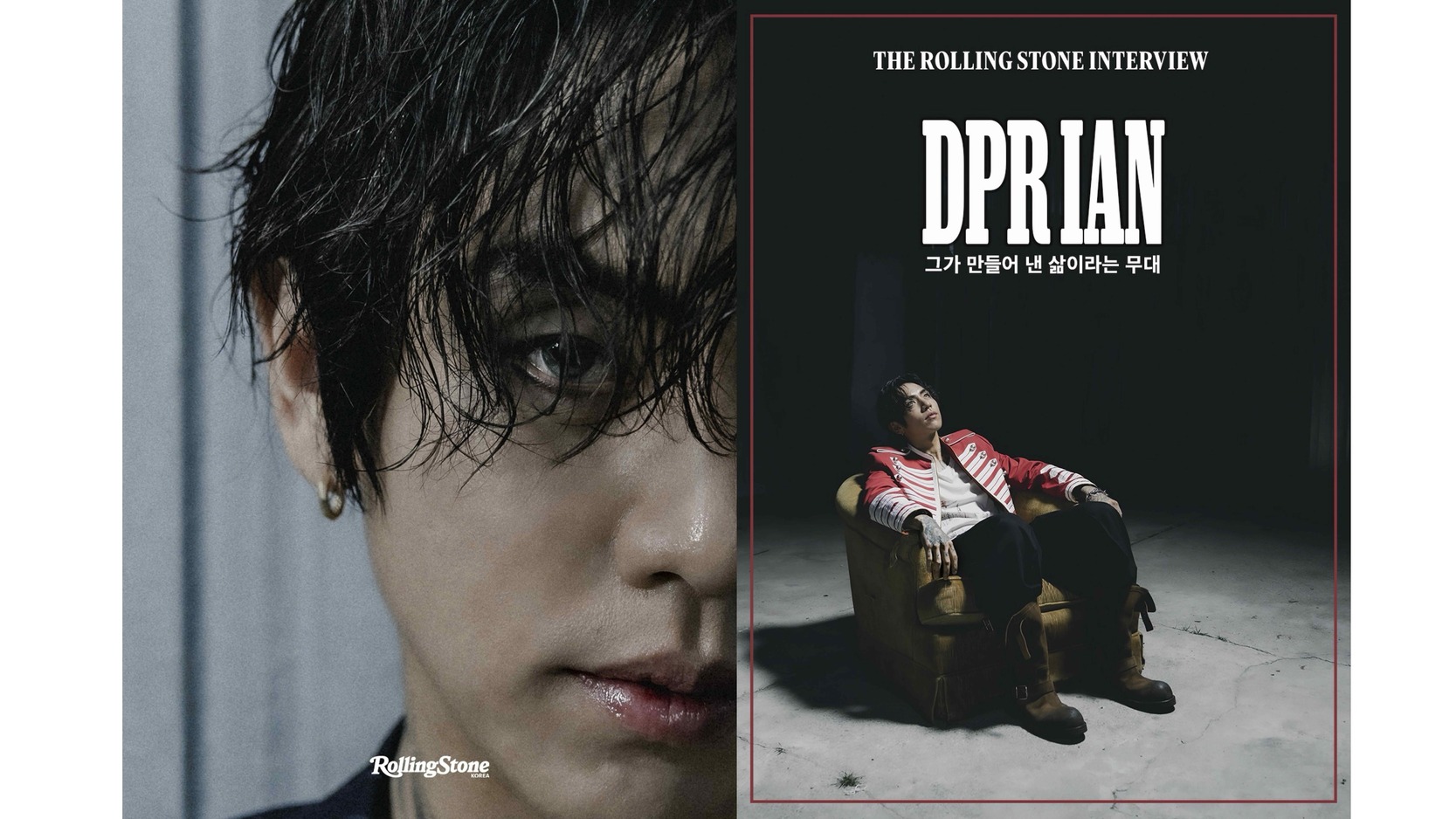
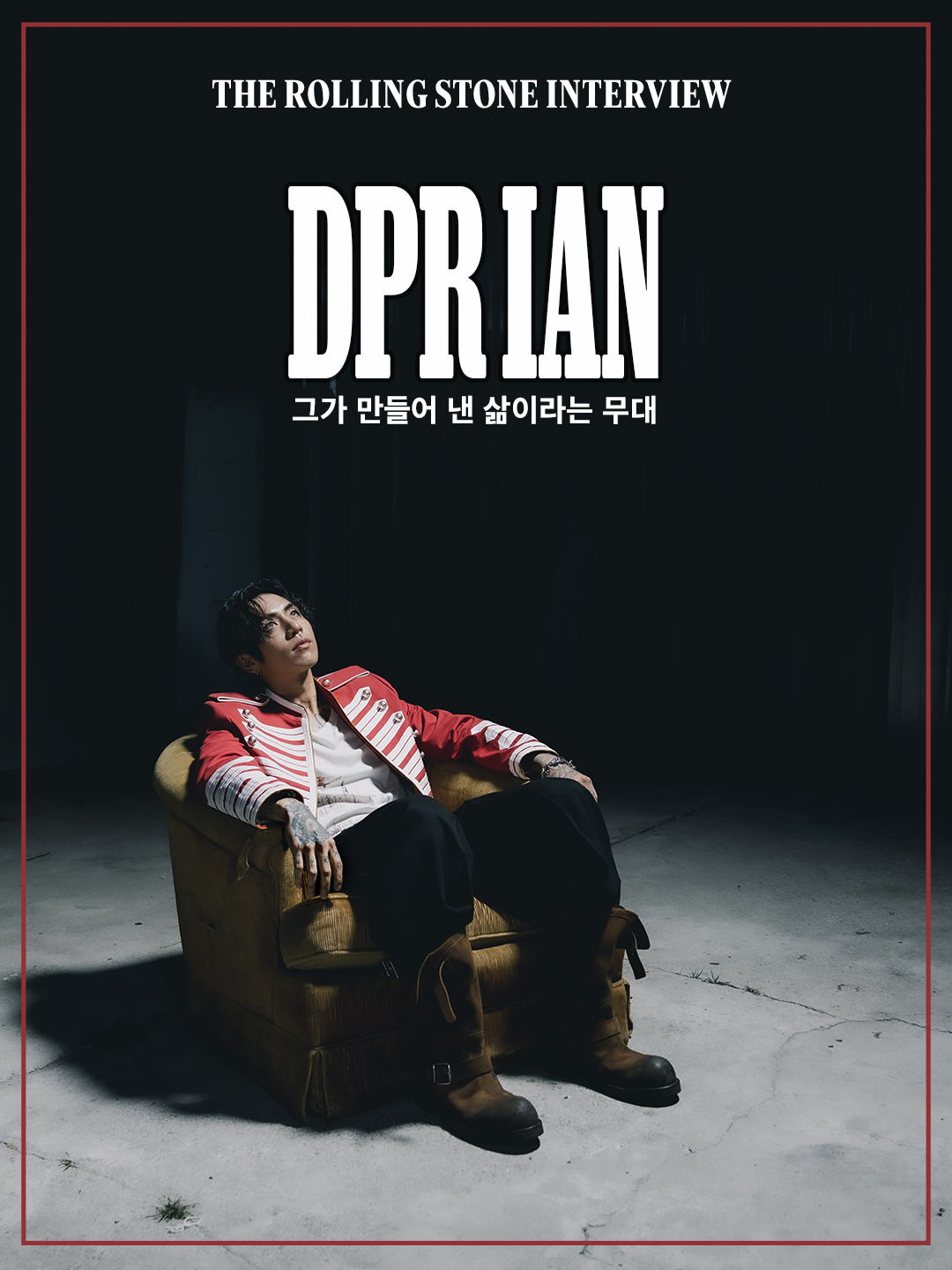
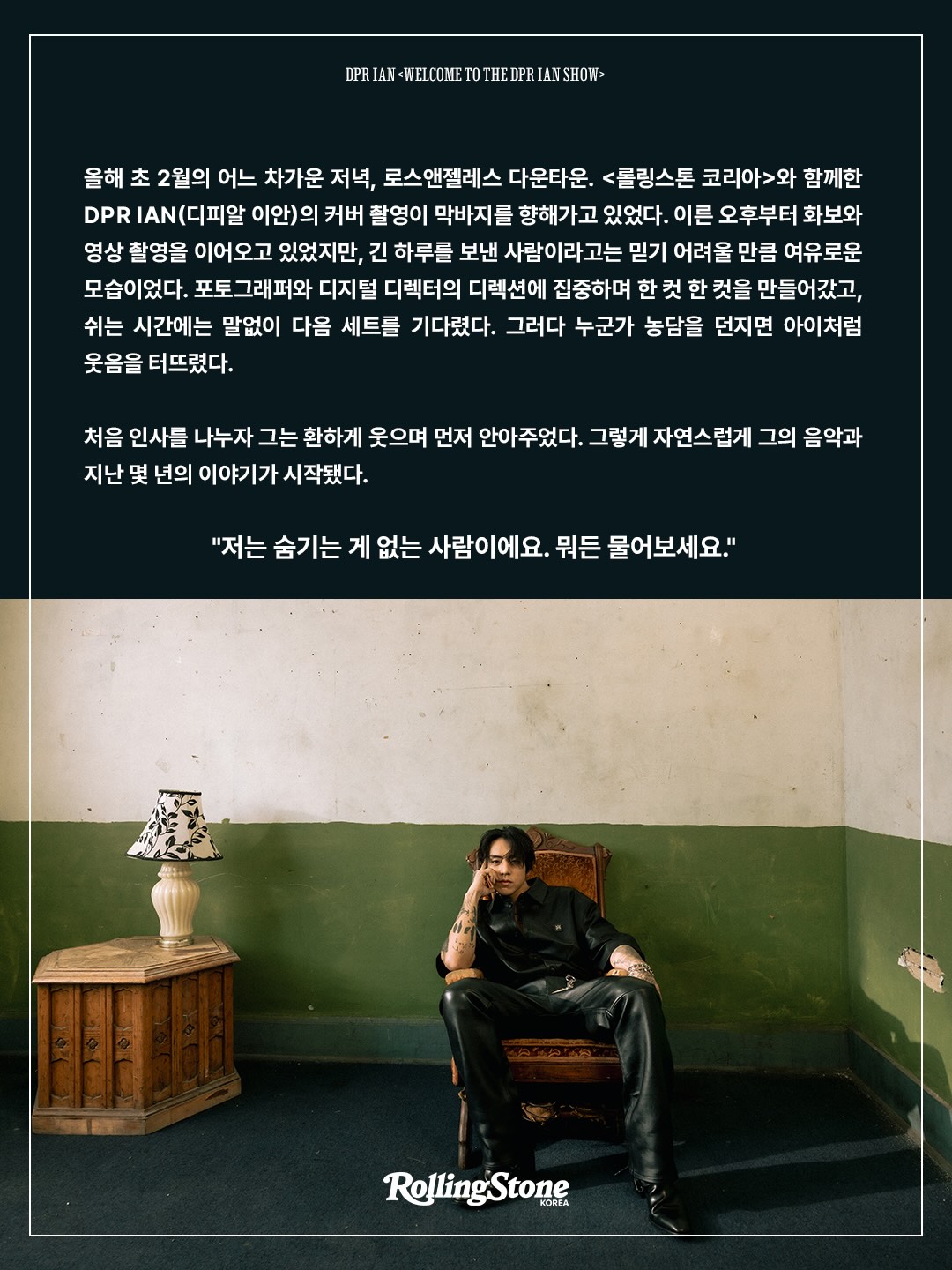
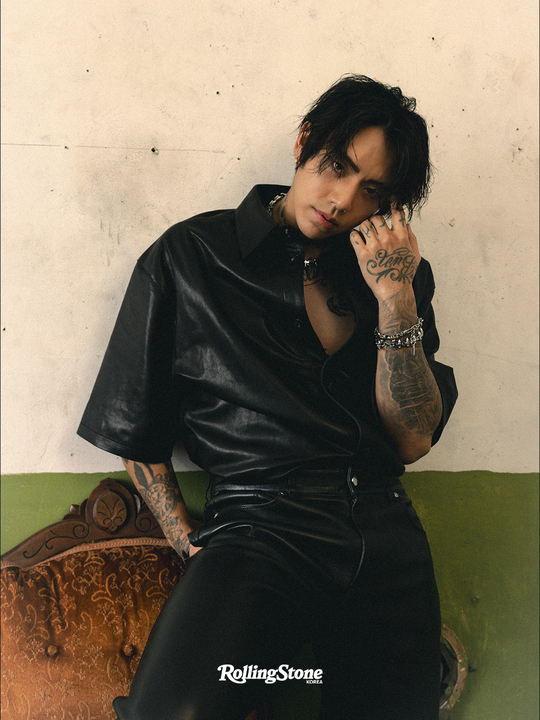
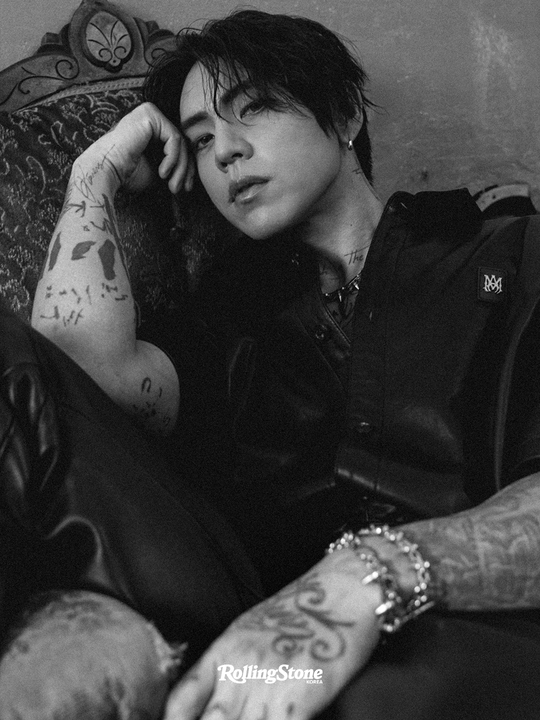
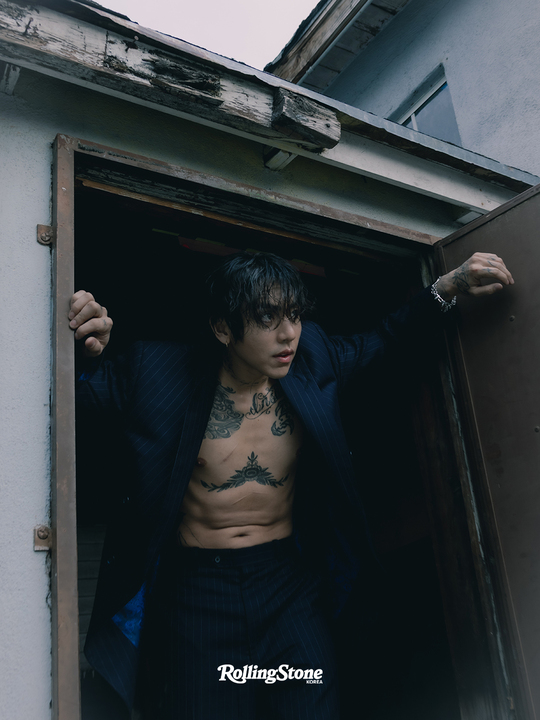
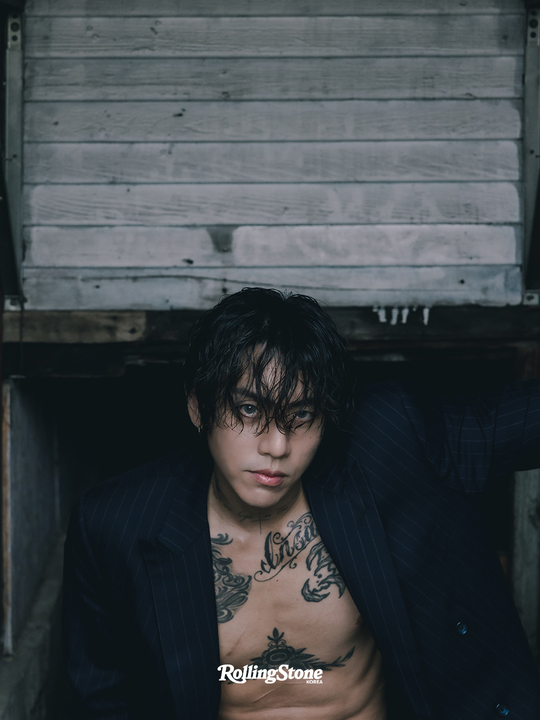
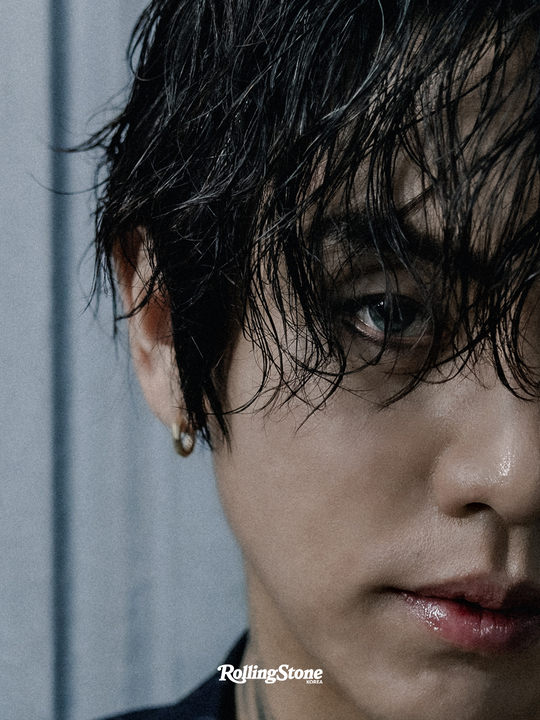
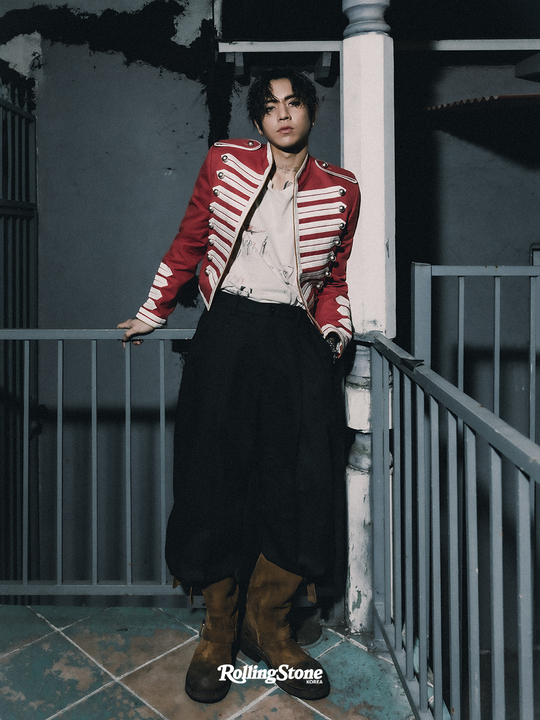
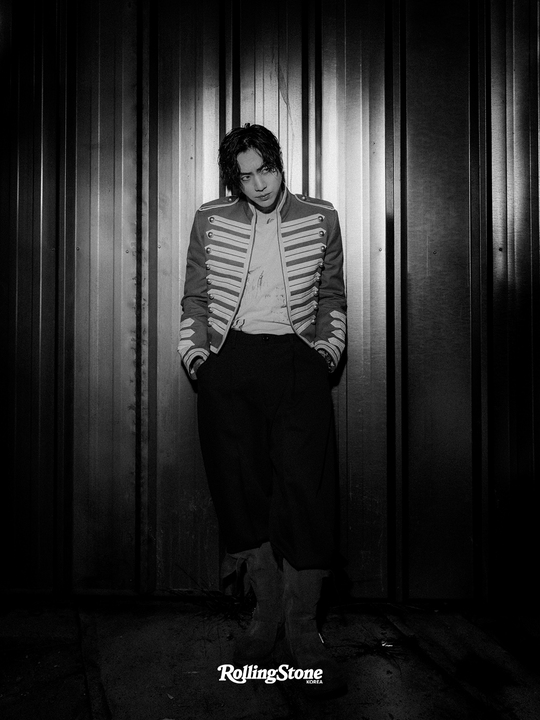
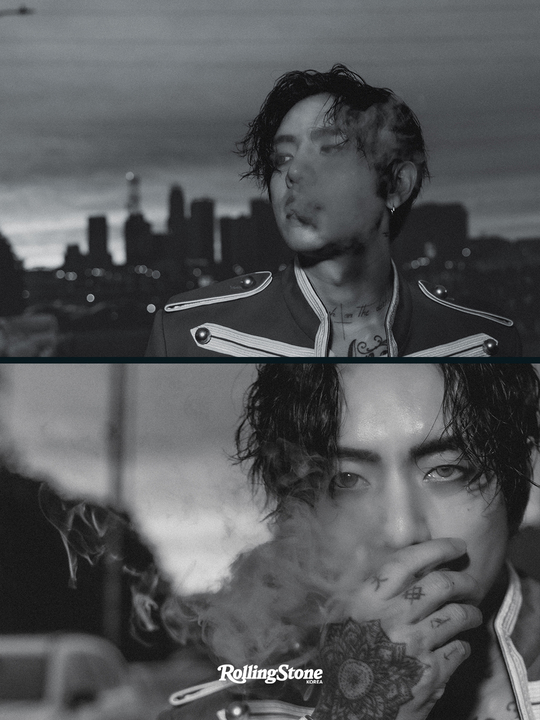
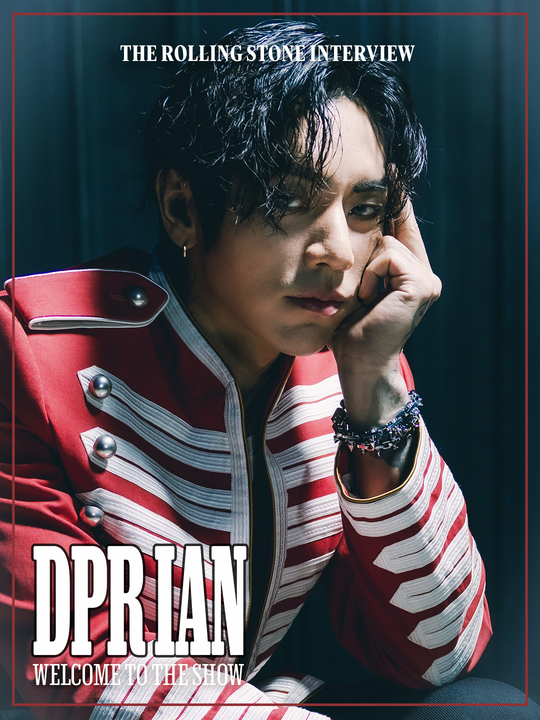
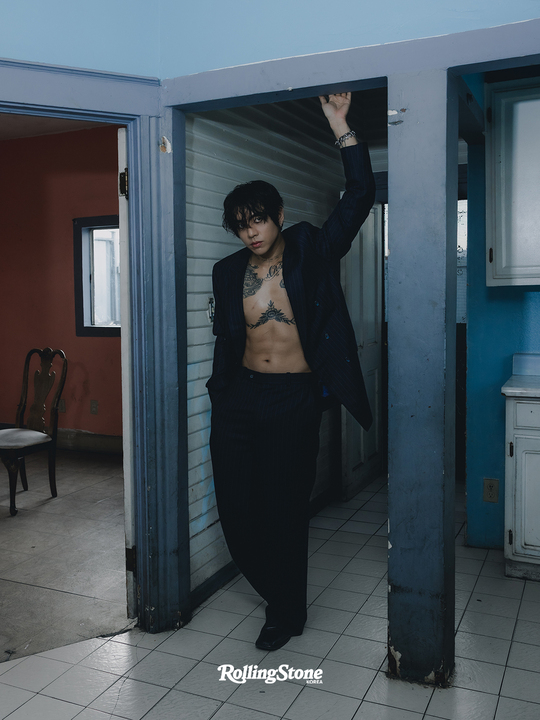
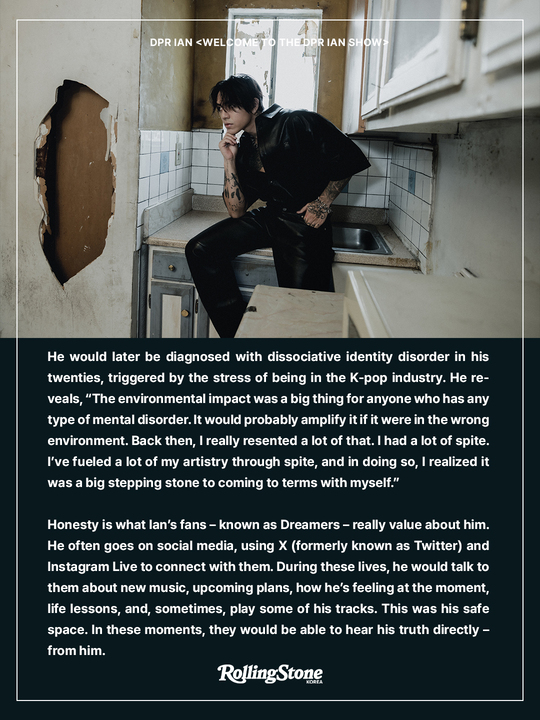
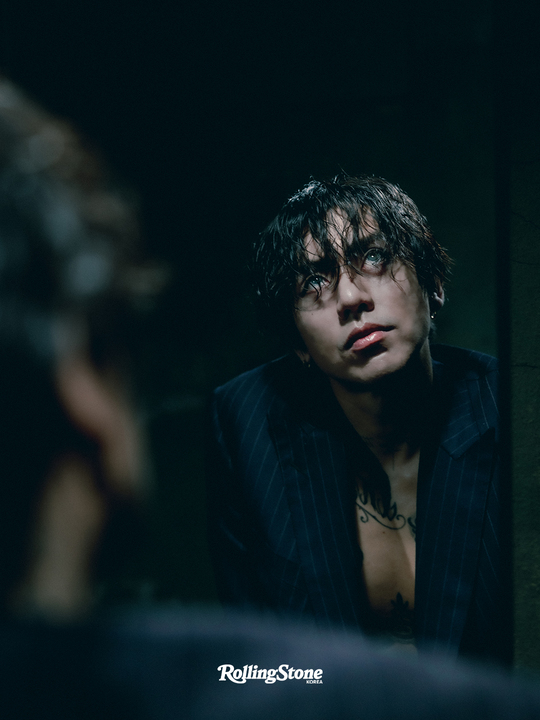
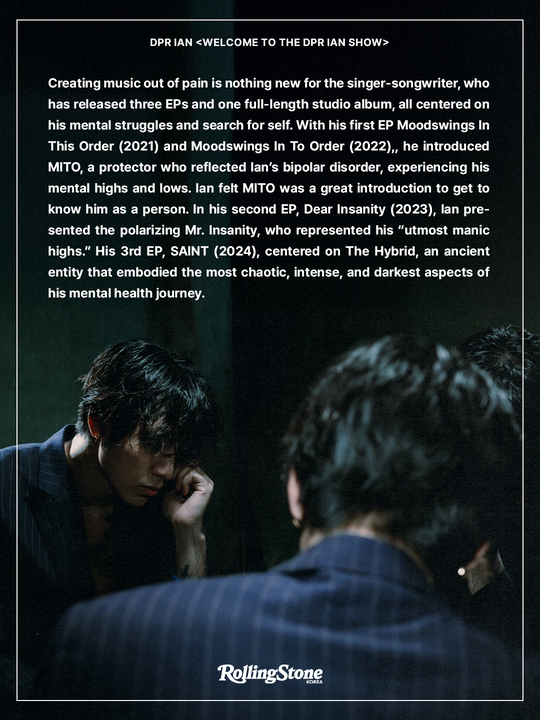
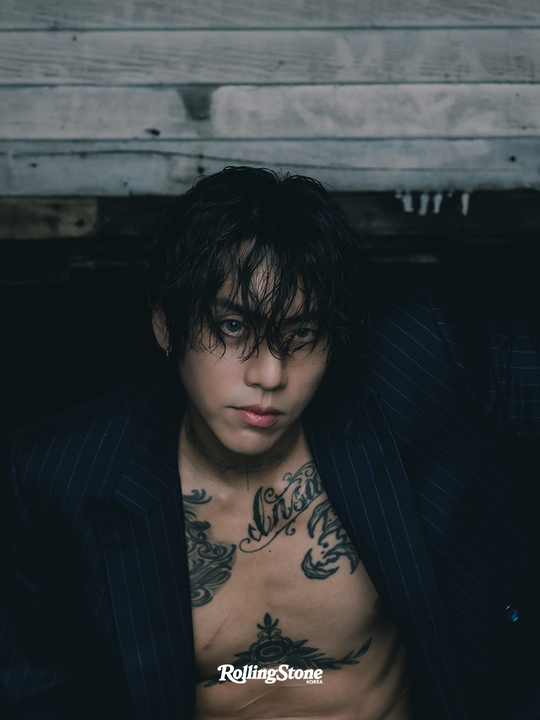
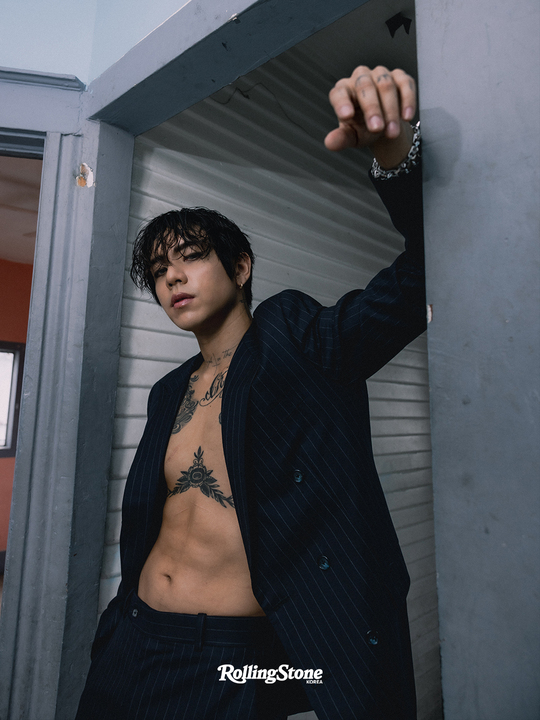
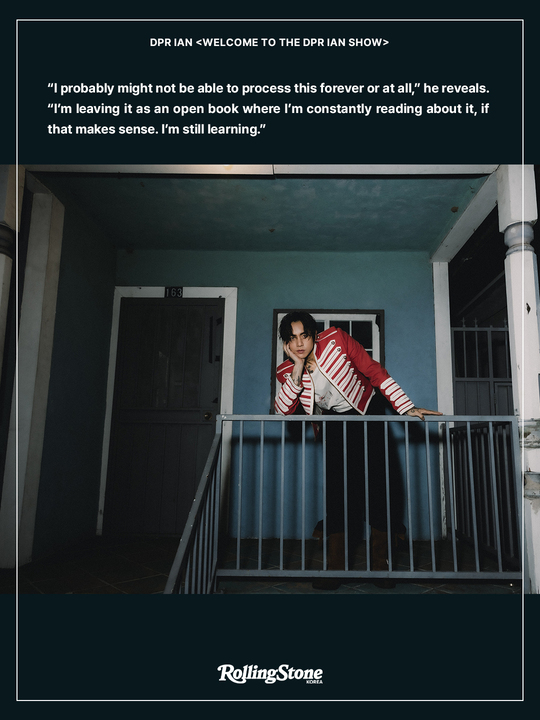
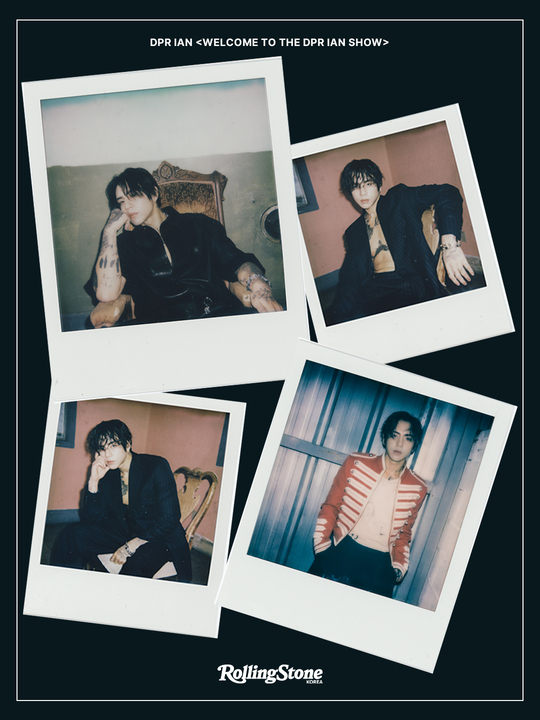
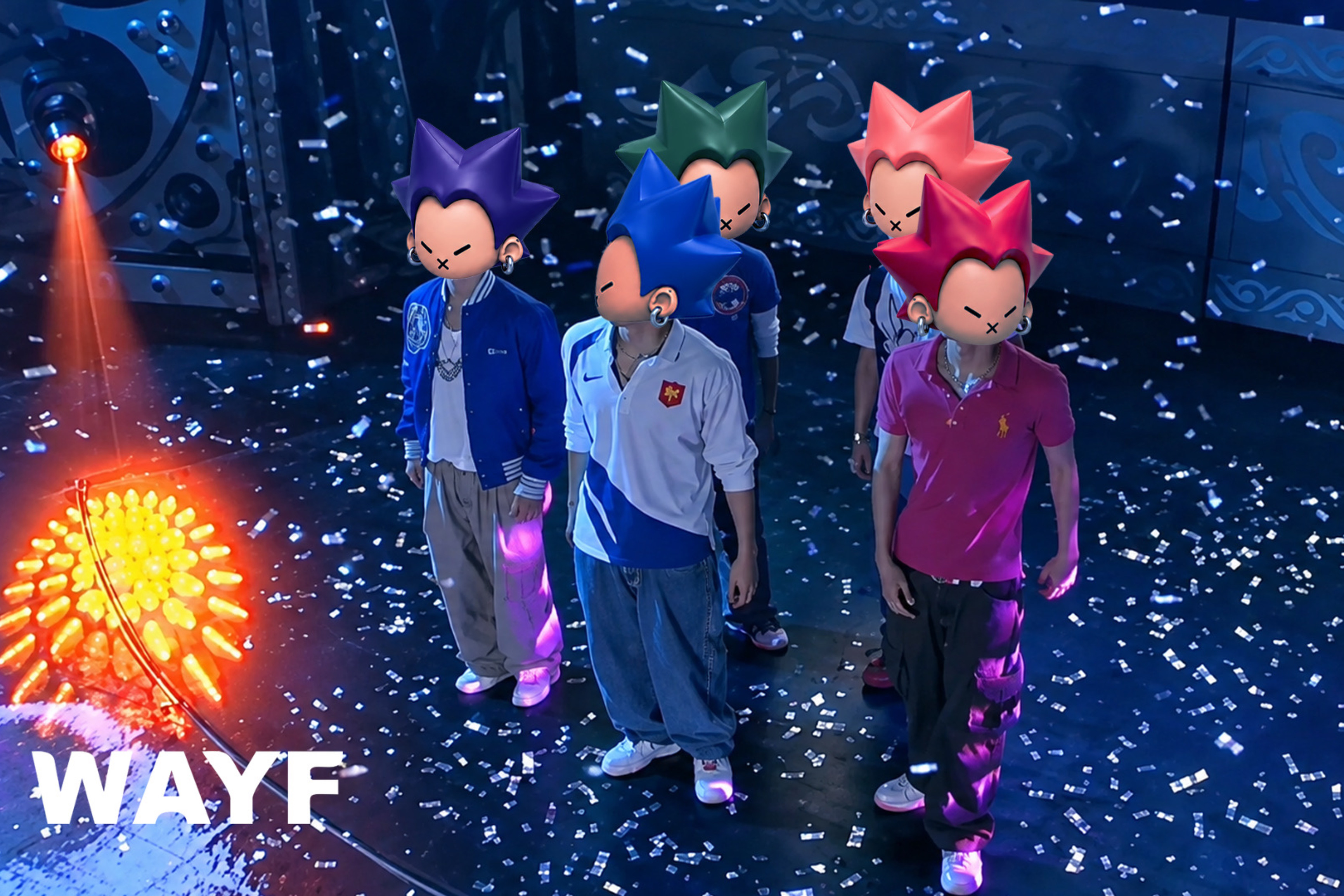
쌀쌀한 2월의 해질녘, 로스앤젤레스 다운타운. DPR 이안(DPR Ian)의 <롤링스톤 코리아> 화보 촬영이 막바지에 다다르고 있었다. 이른 오후부터 이어진 화보 촬영과 영상 콘텐츠 제작에도 불구하고 그의 표정에서는 지친 기색을 찾아볼 수 없었다. 밝은 에너지를 잃지 않은 그는 사진작가와 크리에이티브 디렉터의 지시에 귀를 기울이며 포즈를 취하는 데 몰입했다. 쉬는 시간 중간중간에는 세트가 교체되거나 의상을 갈아입는 동안 조용히 혼자만의 시간을 가졌고, 누군가 농담을 건넬 때만 환하게 웃어 보였다.
인사를 나누자 그는 이내 부드러운 미소를 지으며 따뜻하게 안아주었고, 그의 음악과 커리어에 대한 본격적인 대화가 시작되었다.
“저는 열린 책 같은 사람이에요. 무엇이든 물어보세요.”
솔직함과 비타협적인 태도로 잘 알려진 서른다섯의 한국계 아동 아티스트, DPR 이안의 이 말은 결코 허식이 아니다. 그는 언제나 자신의 삶, 특히 팬들에게 숨김없이 진솔했다. 2012년부터 2015년까지 K-팝 아이돌로 활동했던 시절, 그는 “혹독했던 아이돌 매니지먼트 시스템”에 대해 솔직하게 털어놓곤 했다. 이후 2020년, 자신이 공동 설립한 음악 컬렉티브 DPR(Dream Perfect Regime)을 통해 솔로 아티스트로 데뷔한 뒤에는 학창 시절 진단받았던 조울증(양극성 장애)을 공개하기도 했다. 당시 그는 매일 밤 꿈속에서 새로운 차원과 세계를 만들어 자유롭게 거니는 자각몽(Lucid dream)을 겪으면서도, 그저 사춘기의 일상적인 증상일 뿐이라 여겼다고 고백했다. (K-팝 아이돌 시절 언급 삭제 여부 확인 필요)
“어릴 땐 다들 그러고 사는 줄 알았어요. 잠들기 직전, 꿈속에서 완벽한 통제권과 자유의지를 가질 수 있다는 건 세상에서 가장 설레는 일이었거든요. 그래서 여섯 일곱 살 때부터 제 마음속 세계 지도를 그려왔죠. 저는 제가 꾼 모든 꿈을 기억해요. 어릴 적엔 당연히 또 다른 유니버스가 존재하는 줄로만 알았습니다.”
이후 20대에 접어든 그는 K-팝 산업에서 겪은 극심한 스트레스로 인해 해성 정체성 장애(다중인격) 진단을 받게 된다.
“정신적인 어려움을 겪는 사람에게 환경적인 영향은 정말 치명적이에요. 맞지 않는 환경에 놓이면 증상이 몇 배로 증폭되죠. 그때는 세상에 대한 원망과 악에 받친 마음이 컸어요. 하지만 돌아보면, 그 악바리 같은 오기와 분노가 제 예술적 영감이 되었고, 마침내 제 자신을 있는 그대로 받아들이는 결정적인 계기가 되었습니다.”
팬들(Dreamers)이 이안을 사랑하는 가장 큰 이유 역시 바로 이 같은 ‘진실됨’이다. 그는 X(구 트위터)나 인스타그램 라이브를 통해 팬들과 자주 소통한다. 라이브 방송은 신곡 이야기, 향후 계획, 현재의 감정, 삶의 교훈을 나누고 때로는 미공개 트랙을 들려주는 그만의 안식처다. 팬들은 그곳에서 누구의 필터도 거치지 않은 이안의 진짜 목소리를 듣는다.
그렇기에 지난해 10월, 2024년 DPR을 떠난 전 멤버 DPR REM(본명 스콧 김)을 향해 X를 통해 공개 발언을 시작했을 때도 팬들의 우려는 컸다. 이안은 여러 건의 게시물을 통해 REM의 배신과 착취를 주장하며 지난 10년간 정당한 대가를 받지 못했다고 폭로했다. 팬들은 이 사태가 그의 정신 건강에 더 큰 상처를 남기지 않을까 걱정했다. DPR 브랜드에 불어닥친 논란은 그의 삶에 또 한 번 찾아온 어두운 터널이었다. 아이돌 시절의 트라우마로 무너지던 그를 구원해 준 것이 DPR 컬렉티브였기에, 모든 것을 빼앗긴 듯한 상실감은 더욱 컸다. 폭로 이후 그는 라이브 방송을 통해 “마음의 큰 짐을 덜어냈다”며, DPR 브랜드를 한층 더 거대하고 진실되며 영감을 주는 방향으로 재건하겠다는 의지를 팬들에게 전했다. (더 간결한 형태의 수정 요청 예정)
이안은 다시 일어서야 했다. 슬픔에 빠져 있는 대신, 이 고통을 음악적 영감의 온상으로 삼았다. 그는 자신의 진짜 이야기를 담아낼 새 앨범 작업에 착수했다.
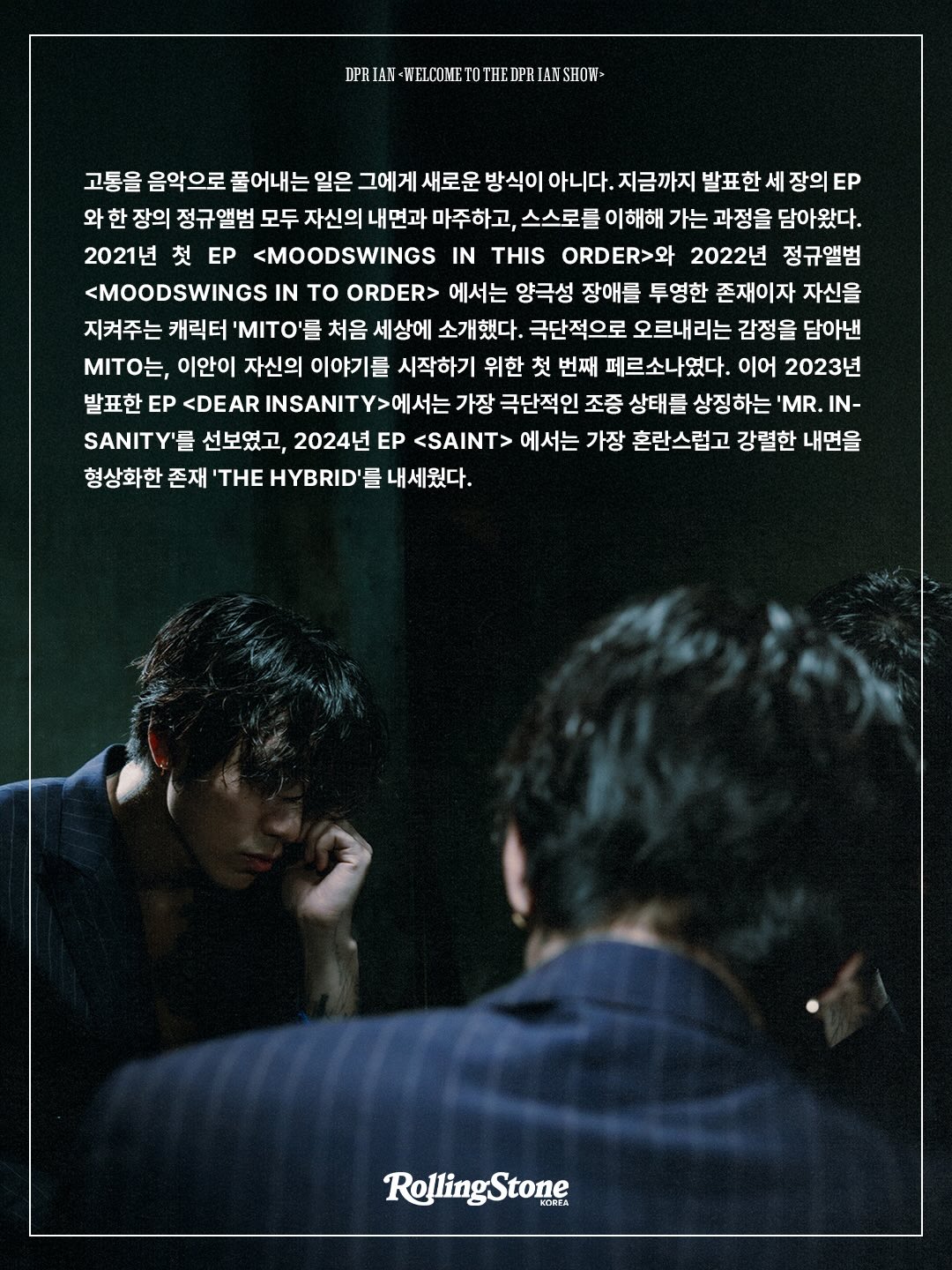
고통 속에서 예술을 창작하는 것은 이 싱어송라이터에게 낯선 일이 아니다. 그간 발표한 3장의 EP와 1장의 정규 앨범 모두 그의 정신적 방황과 자아 탐구를 담고 있다. 첫 EP(2021)와 첫 정규 앨범(2022) 《Moodswings In This Order》에서는 그의 양극성 장애를 투영하고 감정의 기복을 함께 겪어내는 보호자 페르소나 ‘MITO’를 선보였다. 이안은 MITO가 아티스트 이안을 세상에 소개하는 완벽한 매개체였다고 느꼈다. 이어 두 번째 EP 《Dear Insanity》(2023)에서는 그의 ‘조증이 극에 달한 상태’를 대변하는 극단적 인물 ‘Mr. Insanity’를 제시했고, 세 번째 EP 《SAINT》(2024)에서는 그의 고통스러운 여정 중 가장 혼란스럽고 어두운 면을 자아낸 고대의 존재 ‘The Hybrid’를 그려냈다.
음악적 여정을 위해 수많은 페르소나를 만들어냈던 그는 정작 무대 위에서 온전한 ‘자기 자신’으로 서본 적이 없다고 털어놓았다. 모든 아티스트가 연기를 하듯 캐릭터를 만들어 수행하는 줄 알았기에, 정작 아티스트로서의 진짜 자아에 대해서는 깊이 고민하지 않았던 것이다.
“진짜 이안은 누구인가?” 그는 스스로에게 묻는다. “한 번도 선뜻 답하지 못한 질문이에요. 매 앨범마다 그 순간 무대 위에 서 있는 게 나라고 믿었지만, 사실 그건 제 안의 조각이자 일종의 외적 요소에 불과했던 거죠.”
그렇다면 진짜 이안은 누구일까? 그를 완벽히 이해하려면 처음으로 돌아가야 한다.
호주 시드니에서 태어난 이안은 홀어머니 밑에서 자랐다. 어머니는 그의 삶에 절대적인 존재였다. 어린 시절, 어머니가 얼마나 힘든 시기를 지나고 있는지 나중에야 알게 되었지만, 단 한 번도 약한 모습을 보이지 않던 어머니를 보며 그는 일찍부터 삶의韧성(Resilience)을 배웠다. 학교 과제를 미루다 어머니의 엄한 가르침에 밤을 새워 겨우 완성해 제출했던 어린 날의 기억도 선명하다. (가족관계 언급이 이전 인터뷰에서 다뤄진 적이 없어 제외 여부 확인 필요)
“고통을 감내한 뒤에야 비로소 결실을 맺는다는 걸 그때 배웠어요. 아주 작은 일에서부터 시작된 깨달음이었죠.”
이후 호주 울릉공의 예술고등학교에 진학한 그는 음악에 대한 열정을 발견하고 창의성을 발휘하기 시작했다. 주변에는 재능 있는 음악 청년들이 가득했고, 그 역시 뮤지컬 <캣츠>와 ELO(Electric Light Orchestra)의 영향을 받아 록 음악에 깊이 빠져들었다. 중학생 때는 헤비메탈 밴드 활동을 하기도 했다.
“당시엔 록이 최고였어요. 단순히 지나가는 일탈이 아니라 정말 제 삶 자체였죠. 밴드 멤버들과 밤이 새도록 음악 이야기를 나눴어요. 아티스트로 활동하면서도 늘 내면 한 구석에는 그 시절의 스피릿과 다시 연결되고 싶다는 열망이 있었습니다.”
엔터테이너로서의 삶을 꿈꾸기 시작했을 때, 그는 호주 매체에서 아시아인의 입지가 극히 좁다는 현실을 깨달았다. TV나 영화, 뮤직비디오 어디에서도 자신과 닮은 사람을 찾을 수 없었다. 결국 열아홉 살이 되던 해, 그는 단돈 300달러가 든 가방 하나만 든 채 댄서가 되기 위해, 그리고 자신의 뿌리를 찾기 위해 한국으로 향했다.
성공을 향한 집념은 대단했다. 유튜브 채널에 올릴 댄스 영상 동료를 구하기 위해 모르는 집 문을 무작정 두드리고 다니기까지 했다. 앙상블 크루들이 "진짜 그랬냐"며 믿지 못하자, 그는 정말 있었던 일이라며 웃어 보였다.
“일종의 무브먼트를 일으키고 싶었어요.”
‘롬(Rome)’이라는 이름의 아이돌 활동으로 한 차례 시련을 겪은 후, 이안은 뜻이 맞는 아티스트들을 모아 DPR Live(현 다빈), DPR Cream, Kim과 함께 DPR(Dream Perfect Regime)을 결성했다. 초기 멤버들은 서로의 트랙과 라이브 방송에 수없이 참여하며 스티커처럼 붙어 다녔으나, 리더십의 큰 변화를 겪으며 팀의 구조도 달라졌다. 현재 DPR 컬렉티브는 DPR Ian, DPR CREAM, DPR ARTIC으로 재편되었다.
이안은 관계든 물건이든 오래 쥐고 있는 편이라고 인정한다. “하지만 유해한 방식은 아니에요.” 살면서 누군가에게 배신당한 경험은 딱 세 번뿐이었다. 그렇기에 나이가 든 지금, 그 감정의 파동은 더 무겁고 아프게 다가왔다.
이 혼란의 소용돌이 속에서 탄생한 곡 중 하나가 최근 싱글인 〈The Show〉다. 일렉트릭 재즈-팝-록 장르의 이 트랙은 ‘인생 자체가 하나의 쇼이며, 이안은 그 중심에 서 있다’는 메시지를 던진다. 하지만 이안에게 쇼의 시작은 1막의 조명이 켜지는 순간이 아니다. 극장 문을 열고 들어서는 바로 그 순간부터 쇼는 시작된다. 그는 자신의 인생을 단순히 희열과 영감으로 가득 찬 쇼로 포장하고 싶지 않았다. 그 뒤에 숨겨진 혼돈과 자극, 그리고 깊은 절망까지 함께 담아내길 원했다.
그는 〈The Show〉에 담긴 의미가 어린 시절 쇼를 바라보던 시선과 어른이 된 지금의 시선 차이에서 비롯되었다고 말한다. 나이가 들고 삶의 떼가 묻으면서 쇼를 바라보는 감정도 달라지기 마련이다. 어린 시절 가장 좋아했던 디즈니 쇼를 지금 다시 볼 때의 감정을 비교하며 그는 이렇게 설명했다.
“아이일 때 느꼈던 감정과 어른이 된 지금의 감정을 대비시켜 보여주고 싶었어요. 어릴 적 꿈을 키우던 극장과 공간들을 떠올리며, 지금의 나를 있게 한 그 시절에 대한 오마주를 바치고 싶었습니다.”
그러나 작업 과정은 순탄치 않았다. 두 달 동안 7~8개의 트랙을 만들었다가 전부 갈아엎기를 반복했다. 극심한 슬럼프에 빠진 그는 영감이 다시 찾아올 때까지 음악 작업을 전면 중단하기까지 했다.
“어느 날 밤 방에 가만히 앉아 ‘이전 앨범들에서 한 번도 시도하지 않았던, 내게 정말 부족했던 게 뭘까’를 고민했어요. 늘 비슷한 방식만 되풀이하고 있다는 느낌이 들었거든요. 내가 진짜 좋아하는 음악의 본질, 어린 시절 나를 매료시켰던 아트 문화가 무엇이었는지 되짚어봤죠.”
그길로 그는 자신의 음악적 모태였던 ELO와 올리비아 뉴튼 존의 〈Xanadu〉를 찾아 들었다. 밤새 앨범을 들으며 비로소 자신이 놓치고 있던 조각을 찾아낸 그는 곧장 스튜디오로 달려가 〈The Show〉를 완성했다. 자신이 사랑했던 본연의 음악 세계로 돌아가는 작업은 비단 이 곡뿐만 아니라 그의 음악관 전체를 다시 불태우게 했다.
“다시 어린아이가 된 것처럼 가슴을 뛰게 만든 건, 음악이 지닌 드라마틱한 전개와 연극적인 서사, 그리고 높은 완성도였습니다.”
그가 이번 뮤직비디오의 연출, 총괄 프로듀싱, 편집, VFX 및 컬러 디렉팅까지 직접 맡은 이유도 바로 이 때문이다. 이것은 오롯이 그의 이야기여야만 했다. 역사 깊은 LA 극장(Los Angeles Theatre)에서 진행된 촬영에서 이안은 댄서들의 포즈부터 카메라 앵글 하나까지 완벽하게 콘티를 구상했다. 직접 연기를 하는 와중에도 동료 배우들과 댄서들을 지휘하며 지치지 않는 에너지를 발휘했다.
“〈The Show〉의 핵심 콘셉트는 이겁니다. 주인공 ‘IAN’이 어릴 적부터 꿈꿔온 화려한 극장의 메인 무대에 마침내 서게 되는 이야기죠. 보통은 조명이 켜지고 무대에 올라야 쇼가 시작된다고 생각하지만, 이 뮤직비디오의 역설은 무대에 오르기 직전 이미 쇼가 시작되었다는 점입니다. 우리네 일상도 마찬가지잖아요. 친구, 가족, 연인을 만날 때 우리는 저마다의 페르소나를 쓰고 일종의 ‘쇼’를 하며 살아가니까요.”
인터뷰 내내 이안은 자신의 음악과 지나간 아픔들에 대해 담담하고 의연한 태도를 유지했다. 브랜드와 신뢰를 다시 구축해 나가는 과정에서 한층 차분해진 모습이었다. 비록 과거의 상처와 트라우마를 완전히 털어낸 것은 아니지만, 그는 매 순간 음악을 통해 자신을 기록하며 조금씩 답을 찾아가고 있다.
“이 고통을 영원히 치유하지 못할지도 몰라요. 하지만 그렇기에 더더욱 제 삶을 ‘열린 책’으로 남겨두려 합니다. 끊임없이 읽고, 배우며 써 내려가는 과정 자체로 놔두는 거죠.”
(이하 내용은 인터뷰 이후 진행된 인스타그램 라이브 방송 분량으로, 편집 시 제외 여부 확인 필요)
인터뷰가 끝나고 4개월이 채 지나지 않은 시점, 이안은 심하게 지친 표정으로 인스타그램 라이브를 켰다. 그는 지난 20년간 수많은 일을 겪었지만, 특히 최근 몇 달간 극심한 정신적 위기를 맞으며 파괴적인 시간을 보냈다고 고백했다. 64분 동안 진행된 방송에서 그는 수척해진 모습으로 자신의 불안과 압박감, 그리고 치료를 위한 노력들에 대해 담담히 이야기했다. 중간중간 팬들의 댓글에 인사를 건네며 질문에 답을 해주기도 했다.
“제 인생에서 처음으로, 모든 것에 완전히 지쳐버린 기분입니다.” 질환으로 인해 감정의 파동이 더욱 거세게 몰아친다고 밝힌 그는 덧붙였다. “예전의 나로 다시 돌아갈 수 없을 것 같아요. 내 안의 무언가가 깨져버렸습니다. 오랫동안 눌러왔던 둑이 터져버렸고, 이제는 돌이킬 수 없는 지경에 이르렀어요.”
음악 산업과 커리어에 대한 깊은 회의감 속에, 그는 팀과 함께 공들여 준비하던 새 앨범을 전면 폐기했다. 멕시코 몬테레이에서 열릴 ‘FIFA 팬 페스티벌’ 등 이미 예정된 일정만을 끝으로 모든 활동을 중단하겠다고 선언했다. 그는 자신이 얼마나 지쳤는지, 얼마나 노력했는지, 그리고 그 와중에도 음악을 얼마나 사랑하는지를 반복해서 읊조렸다.
“솔직히 말씀드리면, 저 지금 안 괜찮아요. 전혀 괜찮지 않지만, 그저 견뎌보려고 애쓸 뿐입니다. 아주 오랫동안 괜찮았던 적이 없었어요. 지난 4년간, 그 모든 일들이 터진 이후로 제 감정을 짓눌러왔으니까요. 누구의 탓도 아닙니다. 그냥 제 나약함 때문이죠.”
그러나 11일 뒤, 한국에서 다시 켜진 라이브 방송 속 이안은 놀라울 정도로 평온을 되찾은 모습이었다. 걱정했을 팬들에게 사과를 전하며 그는 이전 방송 이후 자신을 돌아보는 시간을 가졌다고 말했다.
“저에게는 스스로를 변화시킬 전환점이 필요했습니다. 여러분이 보내주신 메시지를 읽으며 많은 것을 깨달았고, 삶을 바라보는 시각을 다시 정립할 수 있었어요.”
자신을 구구절절 변명하고 싶지는 않지만, 어둠 속에서 자신을 건져 올려준 팬들의 응원과 주변의 도움—그는 이를 ‘신의 뜻’이라 표현했다—에 깊은 감사함을 표했다.
폐기되었던 앨범 작업도 다시 재개하기로 했다. 물론 세상에 나오기까지는 시간이 더 걸리겠지만, 마음을 다잡고 시작한 일을 끝맺겠다는 결연한 의지를 보였다.
“제 이야기를 완벽히 끝맺고 여러분께 들려드릴 겁니다. 그 활동이 끝나면 활동을 내려놓을지도 모르겠지만, 적어도 그때까지는 끝까지 달릴 겁니다.”
조울증으로 인해 이안의 감정은 극단적인 고조와 하강을 오간다. 그는 남들이 말하는 ‘평범함’이나 ‘미지근한 감정 상태’를 단 한 번도 경험해 본 적이 없다.
“저는 극단적인 감정의 높낮이야말로 제게 가장 익숙한 상태라고 생각하며 살아왔어요. 어릴 적부터 주변이 조용해지면 오히려 불안해서 패닉이 오곤 했죠. 제겐 너무나 낯선 고요함이었으니까요.”
이안의 뇌는 늘 쉴 새 없이 움직이며 온갖 자극과 극단적인 감정들을 흡수한다. 그는 자신을 ‘압력 배출구가 없어 펄펄 끓어오르는 주전자’에 비유하곤 했다. 내부에서 폭발하기 직전의 그 에너지를 외부로 분출할 통로로 찾은 것이 바로 예술과 음악이었고, 그것이 DPR의 시작이었다.
“저는 늘 저만의 예술을 해야 한다는 강박이 있었어요. 양극성 장애 같은 정신적 질환을 남들과 다른 결함이라거나 고쳐야 할 문제로 생각한 적은 없었습니다. 하지만 음악을 시작하면서, 내가 세상에 무슨 이야기를 던져야 하는지 깊게 파고들어야만 했죠.”
그렇게 MITO, Mr. Insanity, The Hybrid, 그리고 아티스트 IAN이라는 페르소나들이 탄생했다. 자신의 감정과 트라우마를 직면하고 처리하는 것은 여전히 세상에서 가장 힘든 일이며, 아마 영원히 완벽히 극복하지는 못할 것이라고 그는 고백한다.
“아마 평생 이 상처들을 다 다스리지 못할지도 몰라요. 모르는 게 약일 때도 있으니까요. 하지만 그렇기에 제 삶을 ‘끝나지 않은 책’으로 두고 계속해서 읽어나가려 합니다.”
이안이 요즘 가슴에 품고 사는 새로운 좌우명은 “내 안의 평화를 지키는 것(Protecting your peace)”이다. 삶이라는 롤러코스터가 아무리 요동치더라도 더 이상 휘둘리지 않겠다는 다짐이다. 그리고 한 가지 분명한 것은, 그 파란만장한 여정을 그는 앞으로도 음악을 통해 우리에게 들려줄 것이라는 사실이다.
[Main Q&A]
RSK : 자신의 삶과 커리어에 대해 얼마나 솔직하게 밝히는 편인가요?
DPR IAN : “저는 열린 책 같은 사람이에요. 무엇이든 물어보세요.”
RSK : 어린 시절 겪었던 자각몽(Lucid Dream)과 정신적 증상들은 어땠나요?
DPR IAN : “어릴 땐 다들 그러고 사는 줄 알았어요. 잠들기 직전, 꿈속에서 완벽한 통제권과 자유의지를 가질 수 있다는 건 세상에서 가장 설레는 일이었거든요. 그래서 여섯 일곱 살 때부터 제 마음속 세계 지도를 그려왔죠. 저는 제가 꾼 모든 꿈을 기억해요. 어릴 적엔 당연히 또 다른 유니버스가 존재하는 줄로만 알았습니다.”
RSK : 환경적인 스트레스와 K-팝 산업에서의 경험이 정신 건강에 어떤 영향을 미쳤나요?
DPR IAN : “정신적인 어려움을 겪는 사람에게 환경적인 영향은 정말 치명적이에요. 맞지 않는 환경에 놓이면 증상이 몇 배로 증폭되죠. 그때는 세상에 대한 원망과 악에 받친 마음이 컸어요. 하지만 돌아보면, 그 악바리 같은 오기와 분노가 제 예술적 영감이 되었고, 마침내 제 자신을 있는 그대로 받아들이는 결정적인 계기가 되었습니다.”
RSK : 정신적인 고통을 겪고 있는 상황에서 팬들과의 관계를 어떻게 바라보고 있나요?
DPR IAN : “팬들에게 언제나 솔직하고 싶어요. '이 친구는 조금 불안정하고 우울해 보이지만, 어떻게든 버텨내고 있구나' 하는 모습을 있는 그대로 보여주는 거죠. 아티스트를 시작할 때부터 생각했던 메시지이기도 합니다. 제가 정신 질환의 대변인은 아니지만, 질환을 안고 살아가면서도 삶의 절반은 충분히 행복할 수 있다는 걸 직접 보여주고 싶어요.”
RSK : 부정적인 경험과 내면의 갈등을 어떻게 작품으로 승화시키나요?
DPR IAN : “의도했던 건 아니에요. 지나온 경험들을 돌이켜보면 안타깝게도 대부분 오기와 분노에서 시작되었죠. 그게 제 본성이니까요. 누군가와의 나쁜 감정을 마음에 계속 품고 있는 건 싫어요. 그걸 극복하는 유일한 방법은 예술 작품으로 승화시키는 것뿐이었습니다. 물러설 수 없는 길이었죠. 털어내고, 끊어내고, 새로 시작하기 위해서라도 예술이 필요했습니다.”
RSK : 지난 10년간 만들어낸 수많은 페르소나와 캐릭터들을 돌이켜보면 어떤 생각이 드나요?
DPR IAN : “지난 10년 동안 내면의 자아를 무수히 해체해 왔어요. 그 과정을 거치며 비로소 제 자신을 받아들이게 되었죠. DPR 이안이라는 아티스트로 존재하면서 정작 대중에게는 제가 만들어낸 컨셉적 인물들로 기억된다는 게 참 아이러니하면서도 흥미롭습니다.”
RSK : 그 수많은 페르소나 뒤에 숨겨진 '진짜 이안'은 누구인가요?
DPR IAN : “진짜 이안이 누구냐고요? 한 번도 선뜻 답하지 못한 질문이에요. 매 앨범마다 그 순간 무대 위에 서 있는 게 나라고 믿었지만, 사실 그건 제 안의 조각이자 일종의 외적 요소에 불과했던 거죠.”
RSK : 어머니 밑에서 자라며 배운 삶의 태도가 시련을 극복하는 데 어떤 도움이 되었나요?
DPR IAN : “고통을 감내한 뒤에야 비로소 결실을 맺는다는 걸 그때 배웠어요. 아주 작은 일에서부터 시작된 깨달음이었죠.”
RSK : 학창 시절 호주에서 접한 록 음악은 본인에게 어떤 의미였나요?
DPR IAN : “당시엔 록이 최고였어요. 단순히 지나가는 일탈이 아니라 정말 제 삶 자체였죠. 밴드 멤버들과 밤이 새도록 음악 이야기를 나눴어요. 아티스트로 활동하면서도 늘 내면 한 구석에는 그 시절의 스피릿과 다시 연결되고 싶다는 열망이 있었습니다.”
RSK : 한국에 처음 왔을 때 무작정 남의 집 문을 두드리고 다녔다는 게 사실인가요?
DPR IAN : “일종의 무브먼트를 일으키고 싶었어요.”
RSK : 최근의 갈등과 감정적인 시련 속에서 어떤 심정이었나요?
DPR IAN : “'내가 과연 이걸 계속할 수 있을까?' 하는 생각이 들었어요. 억눌러왔던 감정들이 충동적으로 폭발하면서 필터 없이 속마음을 털어놓게 되었죠. 하지만 꼭 필요한 과정이었습니다. 돌이켜보면 그 일이야말로 제 음악을 다시 불태우고 앞으로 나아가게 한 촉매제였어요.”
RSK : 최근 싱글 〈The Show〉에 담긴 어린 시절의 기억은 무엇인가요?
DPR IAN : “아이일 때 느꼈던 감정과 어른이 된 지금의 감정을 대비시켜 보여주고 싶었어요. 어릴 적 꿈을 키우던 극장과 공간들을 떠올리며, 지금의 나를 있게 한 그 시절에 대한 오마주를 바치고 싶었습니다.”
RSK : 〈The Show〉를 작업하며 영감을 다시 찾게 된 계기는 무엇이었나요?
DPR IAN : “어느 날 밤 방에 가만히 앉아 ‘이전 앨범들에서 한 번도 시도하지 않았던, 내게 정말 부족했던 게 뭘까’를 고민했어요. 늘 비슷한 방식만 되풀이하고 있다는 느낌이 들었거든요. 내가 진짜 좋아하는 음악의 본질, 어린 시절 나를 매료시켰던 아트 문화가 무엇이었는지 되짚어봤죠.”
RSK : 그 음악적 영향력에 그토록 깊게 매료된 이유는 무엇이었나요?
DPR IAN : “다시 어린아이가 된 것처럼 가슴을 뛰게 만든 건, 음악이 지닌 드라마틱한 전개와 연극적인 서사, 그리고 높은 완성도였습니다.”
RSK : 〈The Show〉 뮤직비디오 촬영 당시 출연진에게 어떤 콘셉트를 전달했나요?
DPR IAN : “〈The Show〉의 핵심 콘셉트는 이겁니다. 주인공 ‘IAN’이 어릴 적부터 꿈꿔온 화려한 극장의 메인 무대에 마침내 서게 되는 이야기죠. 보통은 조명이 켜지고 무대에 올라야 쇼가 시작된다고 생각하지만, 이 뮤직비디오의 역설은 무대에 오르기 직전 이미 쇼가 시작되었다는 점입니다. 우리네 일상도 마찬가지잖아요. 친구, 가족, 연인을 만날 때 우리는 저마다의 페르소나를 쓰고 일종의 ‘쇼’를 하며 살아가니까요.”
RSK : 현재 본인이 안고 있는 상처와 트라우마를 어떻게 다스리고 있나요?
DPR IAN : “이 고통을 영원히 치유하지 못할지도 몰라요. 하지만 그렇기에 더더욱 제 삶을 ‘열린 책’으로 남겨두려 합니다. 끊임없이 읽고, 배우며 써 내려가는 과정 자체로 놔두는 거죠.”
[Photography — Esther Kim]
Welcome to DPR Ian's Show
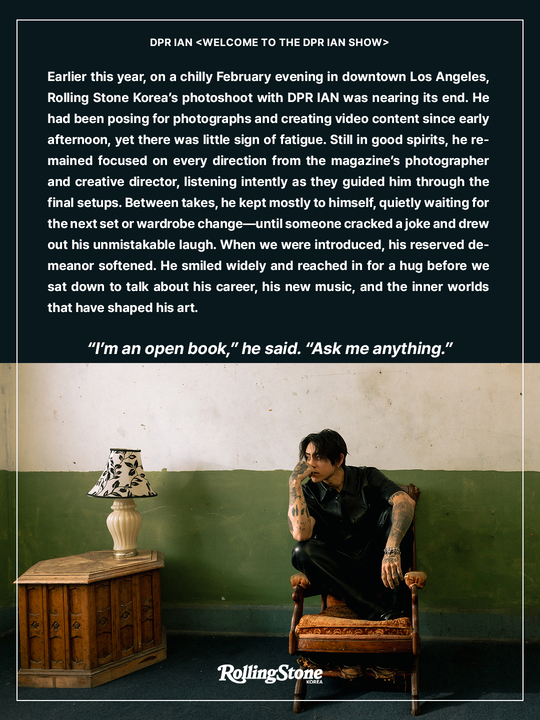
It’s a chilly February evening in downtown Los Angeles; the Rolling Stone Korea photoshoot for DPR Ian is almost done. The musical artist had been posing for photos and creating video content since the early afternoon, but you couldn't tell from his demeanor. He is in good spirits, focused on the instructions from the magazine’s photographer and creative director, listening intensely as they pose him. In between breaks, he is quiet, keeping to himself as he waits for the set change or to change his outfit, only breaking into a laugh when someone cracks a joke.
When we are introduced, he softens, smiling widely, reaching in for a hug before our chat about his career and new music.
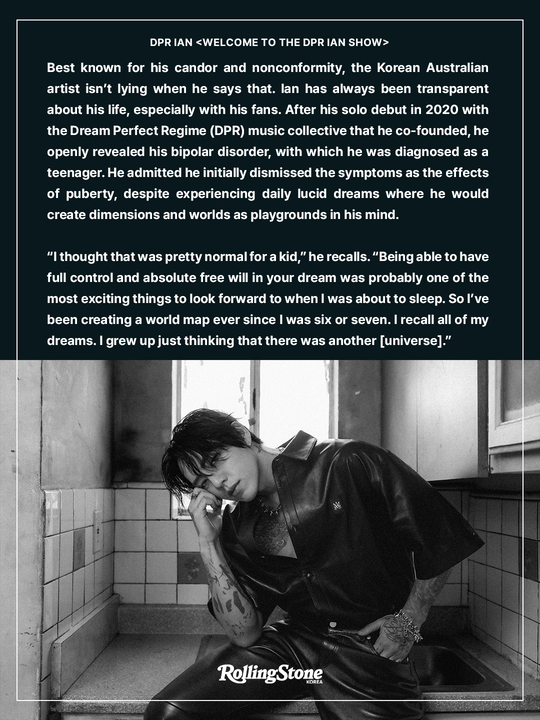
Best known for his candor and nonconformity, the 35-year-old Korean Australian artist isn’t lying when he says that. Ian has always been transparent about his life, especially with his fans. After his experience in the K-pop industry from 2012 to 2015, he was outspoken about the difficulties of being an idol, citing the “grueling K-pop idol management system.” After his solo debut in 2020 with the Dream Perfect Regime (DPR) music collective that he co-founded, he openly revealed his bipolar disorder, with which he was diagnosed as a teenager. He admitted he initially dismissed the symptoms as the effects of puberty, despite experiencing daily lucid dreams where he would create dimensions and worlds as playgrounds in his mind. (Need to confirm whether to exclude the mention of his K-pop idol days)
He would later be diagnosed with dissociative identity disorder in his twenties, triggered by the stress of being in the K-pop industry.
Honesty is what Ian’s fans – known as Dreamers – really value about him. He often goes on social media, using X (formerly known as Twitter) and Instagram Live to connect with them. During these lives, he would talk to them about new music, upcoming plans, how he’s feeling at the moment, life lessons, and, sometimes, play some of his tracks. This was his safe space. In these moments, they would be able to hear his truth directly – from him.
It’s why in October of last year, he began making public statements on X directed at one of his former DPR collective members, DPR REM (now known as Scott Kim), who had left in 2024. In a series of tweets, Ian accused REM of betrayal and exploitation, alleging that REM has failed to pay Ian what he was owed over the past 10 years. Many fans became concerned for Ian, fearing it would trigger his mental disorder even further. The controversy surrounding the DPR brand was another dark period in his life. Forming the Collective had “saved him” from spiraling due to the trauma of being an idol, but now he felt like everything was being taken away from him. Following his tweets, he posted a few livestreams to explain himself, assuring his fans that “a big burden has been lifted off his shoulders” and that he plans to rebuild the DPR brand to be bigger, better, more honest, and more inspiring. (Planning to request a more concise revision)
Ian had to pivot. Rather than drowning in sorrow, he turned the situation into a source of musical inspiration. He began working on new music, determined to release an album that really told his story.
Creating music out of pain is nothing new for the singer-songwriter, who has released three EPs and one full-length studio album, all centered on his mental struggles and search for self. With his first EP (2021) and studio album (2022), both titled Moodswings In This Order, he introduced MITO, a protector who reflected Ian’s bipolar disorder, experiencing his mental highs and lows. Ian felt MITO was a great introduction to get to know him as a person. In his second EP, Dear Insanity (2023), Ian presented the polarizing Mr. Insanity, who represented his “utmost manic highs.” His 3rd EP, SAINT (2024), centered on The Hybrid, an ancient entity that embodied the most chaotic, intense, and darkest aspects of his mental health journey.
With so many personas created to tell his musical journey, he reveals that he’s never really gone on stage as himself because it didn’t make sense to him. He thought all artists were like that, creating characters to perform, so he didn’t think much about who he truly was as an artist.
But just who is Ian? To fully understand him, one would have to start from the beginning.
Born in Sydney, Australia, Ian was raised by a single mother who has been a significant figure in his life. Growing up, he never saw any weakness in his mother, even though he learned she was “really going through it at the time,” which taught him resilience at an early age. He recalls procrastinating on a school project, but his mother made him do it, even if it meant he had to painfully stay up all night to finish, which he did just before school. (Need to confirm whether to exclude this, since family relationships have never been mentioned before)
He attended a performing arts school in Wollongong, Australia, where he found his love for music and was encouraged to explore his creativity. He was surrounded by gifted and talented “music heads.” He himself was into rock music, inspired by the Broadway musical CATS and the Electric Light Orchestra. He was even in a heavy metal rock band in middle school.
When he realized he wanted a career in entertainment, he knew he couldn’t do it in Australia, where Asians weren’t really represented in the industry. He never really saw someone who looked like him on TV, film, or in music videos. So, at 19, Ian packed his bags with $300 to his name and went to South Korea to become a dancer and connect with his cultural roots.
He was so determined to succeed that he started knocking on random doors to find people to dance with for his YouTube Channel. He laughs as his crew questions if he actually did that and reaffirms it’s what really happened.
After his troubled life as an idol under the moniker “Rome,” Ian found like-minded artists to form Dream Perfect Regime (DPR), alongside DPR Live (now known as Dabin), DPR Cream, and Kim. Initially, members were inseparable, featuring and collaborating with one another in their tracks and livestreams, but after major shifts in leadership, everything changed. The Collective now consists of DPR Ian, DPR CREAM and DPR ARTIC.
Ian admits he’s the type to hold onto things, including relationships, for a long time, but “not in a toxic way.” He’s been betrayed only three times in his life. Because of that and his age, the emotions just hit a bit harder.
One of the songs that came from this spiral was his recent single, “The Show.” The electric jazz-pop-rock track suggests that life itself is a performance, and Ian is at its center. For Ian, the show doesn’t start in a typical sense when the lights come on for the first act. It begins the minute you walk into the theater. He didn’t want to make “the show of his life” because he felt what was “meant to feel like a very inspiring reliving and somewhat euphoric moment, " but it rather feels a lot more chaotic and obviously exciting, but “there’s also despair going into that.”
He admits that the meaning behind “The Show” reflects his feelings about watching shows as a kid versus as an adult. As adults, we have gone through life, forming mature – sometimes still immature – thoughts and experiences that give new meaning to these shows. He compares watching his favorite childhood Disney show then and now.
He confesses that he struggled to write this track, having made seven to eight different tracks over two months and never feeling he got it right. He kept writing and then deleting the song entirely. He felt so lost that he paused making music until he could feel inspired again.
That’s when he went back into his past and listened to his first introduction to music: Electric Light Orchestra & Olivia Newton-John’s “Xanadu.” He spent the whole night listening to the album and realized what he was missing, going straight into the studio to create “The Show.” He was so excited to tap into the music that inspired him, not just for this song, but for his music in general.
It’s why he had a hand in the creative direction of the music video as director, executive producer, editor, and visual effects and color designer. This was his story to tell. Shot at the historic Los Angeles Theatre, Ian knew exactly how he wanted it to look, down to the dancers' poses and the camera angles. Between filming his takes, he would direct the rest of the cast and dancers, taking on multiple roles while still feeling energetic and positive.
Throughout the conversation, Ian is calm and reassuring about his feelings regarding his music and the situations that occurred last year, and feels refreshed about rebuilding his brand and trust. He is still constantly processing the pain and trauma, figuring things out as he goes, and documenting his experiences in his music.
-The following is content covered in the Instagram Live after the interview; needs to be confirmed whether to exclude-
Less than four months later, Ian went on Instagram Live to greet his fans, looking exhausted and defeated. He tells his audience that a lot has happened to him over the last twenty years, but mostly in the last couple of months. He admits he’s been chaotic and destructive lately because he’s going through a mental crisis. He remains calm throughout the entire 64 minutes, explaining his feelings, his efforts to get help, and the pressure he’s been dealing with. During his discourse, he pauses to say hello to fans who leave comments, quickly answering their questions before returning to his remarks.
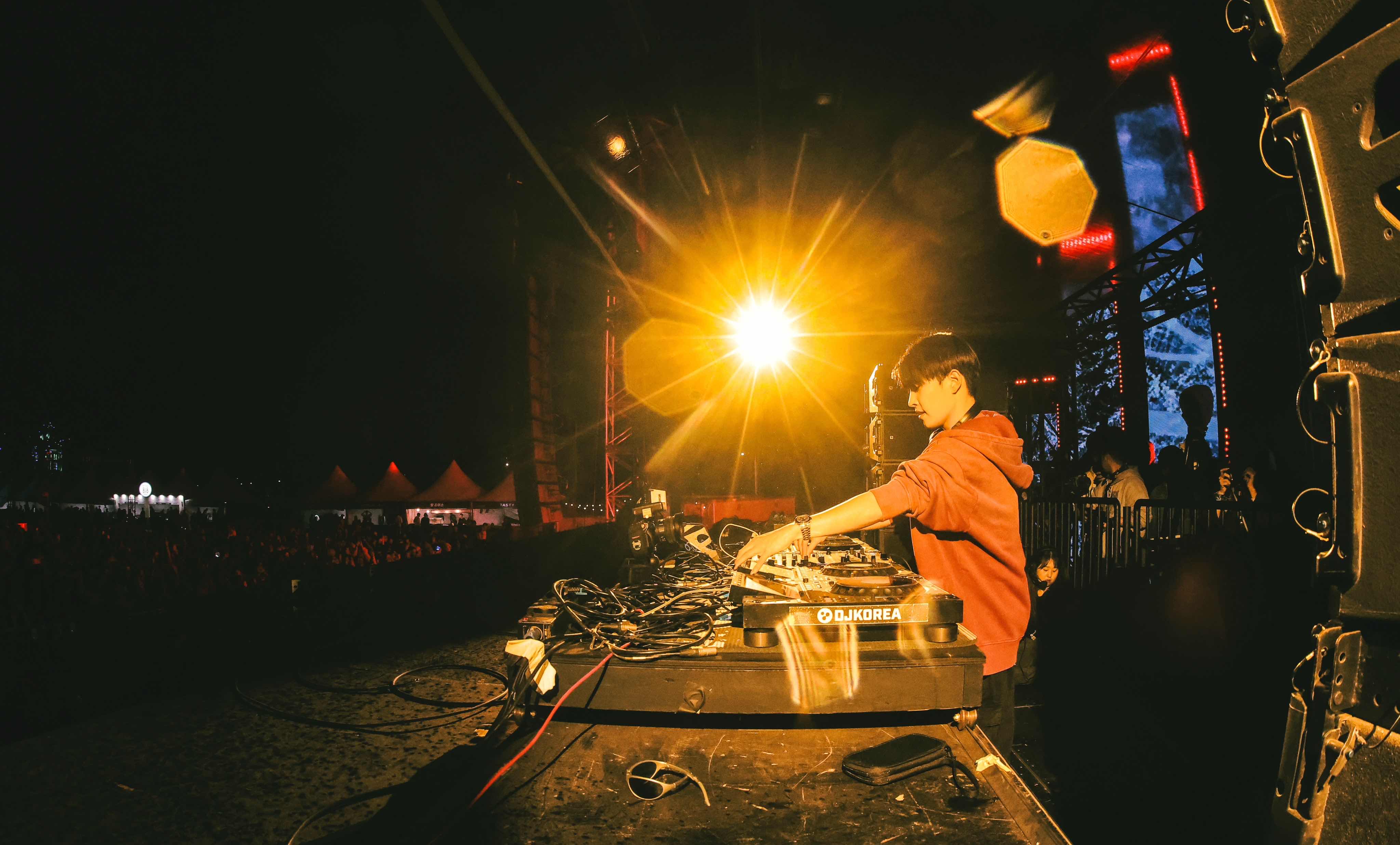
Feeling resigned over his career and the music industry, he scrapped the entire album he had been working so hard on, along with his team, and said that the events that he had already booked and planned – including the FIFA Fan Festival in Monterrey, Mexico – would “be his last on his schedule.” As he processes his thoughts, he repeats how tired he is, how hard he’s tried, how much he’s struggling, and how much he loves creating music.
Eleven days later, he returned to Instagram Live from Korea, where things seemingly felt back to normal – or whatever state it was before his spiral. He’s been okay, catching up with others and himself since the previous livestream. He understands that people were worried about him and apologizes for causing them concern.
He doesn’t feel the need to explain himself, but he is thankful for the intervention he received during that moment – though he doesn’t say exactly what the intervention was. He says “God’s will,” but then credits his fans for pushing him “out of the dark,” which “saved him.”
The album is back on, but he’s going to take some time before it’s released. Right now, he wants to reinstate his mindset to move forward and finish what he started.
With Ian’s disorders, he struggles with his moods, encountering moments of highs and lows – sometimes to extremes. He’s never really engaged with the idea of what it feels like to be “normal” and “lukewarm,” which is how he likes to describe his mood temperature.
Ian’s mind is always racing, taking in all the stimuli and the polar ends of emotion, which makes him feel like he needs to do something about it. He describes himself best as a kettle steaming with hot, boiling water, with no place to pressurize it. It’s all boiling in from the inside. That’s when he found art and music as an outlet for these feelings, which is how DPR came to be.
That’s how MITO, Mr. Insanity, The Hybrid, and IAN were created to tell Ian’s story and process his ever-changing emotions. He admits that processing his mental state, experiences, and triggers is still the hardest thing for him to ever do, and he still hasn’t come to terms with it. He doesn’t think he ever will.
Ian’s new motto, which he’s living by, is “Protecting your peace.” Life is going to be like a rollercoaster filled with ups and downs, but he isn’t going to let it defy him. One thing's for sure: he’s going to tell you all about it.
[Main Interview]
RSK : How open are you about your life and career?
DPR IAN : “I’m an open book. Ask me anything.”
RSK : What was it like experiencing lucid dreams and mental disorder symptoms as a child?
DPR IAN : “I thought that was pretty normal for a kid. Being able to have full control and absolute free will in your dream was probably one of the most exciting things to look forward to when I was about to sleep. So I’ve been creating a world map ever since I was six or seven. I recall all of my dreams. I grew up just thinking that there was another [universe].”
RSK : How did environmental stress and your time in the K-pop industry affect your mental health?
DPR IAN : “The environmental impact was a big thing for anyone who has any type of mental disorder. It would probably amplify it if it were in the wrong environment. Back then, I really resented a lot of that. I had a lot of spite. I’ve fueled a lot of my artistry through spite, and in doing so, I realized it was a big stepping stone to coming to terms with myself.”
RSK : How do you view your relationship with fans regarding your mental health struggles?
DPR IAN : “I like to be real with my fans. It’s the idea of giving the notion or projection that this guy has a few loose screws. This guy is depressed, but he’s holding it together. It’s one of the messages that I thought about when I started as an artist. I’m not an advocate. I can’t speak on anyone else’s behalf regarding their mental disorders, but what I can show them is the idea of living with it and showing them that half the time I’m good. It’s a level of perspective in mind.”
RSK : How do you channel negative experiences and tension into your work?
DPR IAN : “I don’t think this was something that I planned for. I look back at all my experiences and, unfortunately, they were really born from spite. It’s just the person that I am. I don’t like holding on to a lot of bad tension with people. The only way I can come back up from it is to turn it into some type of art piece. I felt like this was something that I couldn’t step away from. What would it take to move forward, cut ties, and start something new?”
RSK : How do you reflect on the characters and personas you’ve created over the past decade?
DPR IAN : “I've unraveled more in the last 10 years than I have ever in my life. After all of that, I’ve come to terms with [myself]. It’s so ironic that I’m an artist called DPR Ian, but a lot of people know me for having characters and conceptualized beings to be the artist that I am.”
RSK : Who is the real Ian behind these conceptualized characters?
DPR IAN : “Who is Ian? I’ve never really been able to answer that question. I’ve always thought it was me in that place at that moment and time [with each album], but [those are] just a figment of me, like an external factor.”
RSK : What did growing up with your mother teach you about handling difficulty?
DPR IAN : “I see the fruition of doing what I had to do through a certain amount of pain. It started with small things like that.”
RSK : What influence did rock music have on you during your school years in Australia?
DPR IAN : “Rock was obviously the biggest thing back then. That was literally just not a phase. I really had to live it. I was in a band. I’ve explored music with those friends time and time again, endless nights talking about it. There was a part of me ever since I did my artistry that I’ve always wanted to reconnect with that aspect of it.”
RSK : Is it true that you knocked on random doors when you first arrived in South Korea?
DPR IAN : “I wanted to start a movement.”
RSK : How did you feel during the recent conflicts and emotional trials?
DPR IAN : “Can I even keep doing this? So the whole fiasco was something when I switched impulsively, and it’s the kind of version of you that has no filter and is not afraid to say anything you’ve been suppressing, which needed to happen. Looking at it now, it really was the catalyst for fueling some parts of [my music] and the aspect of moving on.”
RSK : What was the childhood memory connection behind your single “The Show”?
DPR IAN : “I wanted to give that side-by-side, emotional connection. It really deterred the idea of what a show was for a kid, and now, as an adult. You think about it very differently, but it still hits the same way. It reminded me of the theaters and the places that I would go as a kid that would open up my imagination. That’s where everything spiraled into what I am doing today. I really wanted to pay homage to that.”
RSK : How did you rediscover your inspiration when creating “The Show”?
DPR IAN : “I just sat in my room one night and thought about what I was missing from this album that I never really took a route with all my other albums. Because I felt I was duplicating the same method. I sat there and thought about what I really like about music. What is it that I like about the art culture that I grew up being influenced by?”
RSK : What made you connect so deeply with that musical influence?
DPR IAN : “It was the progressiveness, the theatrical-ness, and the musical level that tapped into a part of me that was a kid again.”
RSK : What concept were you directing for the cast during the music video shoot for “The Show”?
DPR IAN : “So the whole idea for ‘The Show’ is this theatre that we’re going to be [shooting] at is a place that the character IAN grew up almost fantasizing about going to and performing at the main theater. He finally gets this opportunity and jumps on [it to] perform there. ‘The Show’ technically should happen when he goes on stage and the lights come on, but the idea is that it happens right before the show. It’s a bit of a paradox. The whole idea behind it, if you think about it, is that in our everyday lives, we pretty much put on a show. Whether it be meeting our friends, families, or loved ones, we all somewhat put up a certain character.”
RSK : How are you currently dealing with and processing the pain and trauma?
DPR IAN : “I probably might not be able to process this forever or at all. I’m leaving it as an open book where I’m constantly reading about it, if that makes sense. I’m still learning.”
BY PROVIDING YOUR INFORMATION, YOU AGREE TO OUR TERMS OF USE AND OUR PRIVACY POLICY. WE USE VENDORS THAT MAY ALSO PROCESS YOUR INFORMATION TO HELP PROVIDE OUR SERVICES.